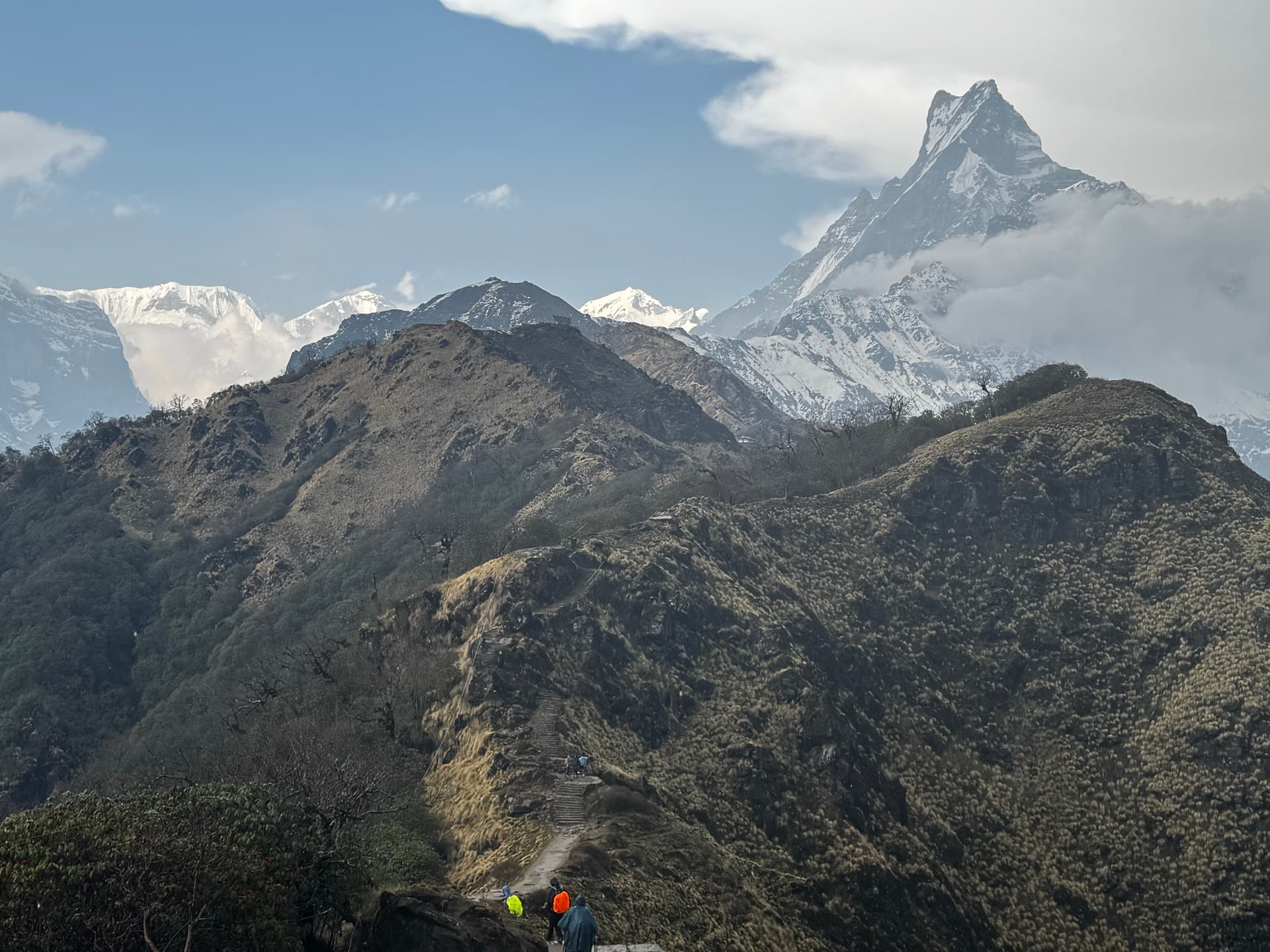
The Mardi Himal Trek is the Annapurna region's best-kept secret — a short, ridge-walking trek that puts you eye-to-eye with snow giants without demanding two weeks of your life. Snow peaks close enough to touch, a ridge that floats above a sea of cloud, sunrise lighting up Machhapuchhre (Fishtail): you get the full high-Himalaya experience, and it's still blissfully quiet compared to its famous neighbours like the Everest Base Camp Trek.
We trekked Mardi Himal recently with Base Camp Hike Pvt Ltd, climbing a forested ridge all the way to the Mardi Himal Base Camp viewpoint at 4,500 metres. We filmed the whole journey — watch it first, then read on for everything you need to plan your own trek.
Why Mardi Himal?
Mardi Himal sits inside the Annapurna Conservation Area, on a ridge that runs just east of the classic Annapurna Base Camp (ABC) sanctuary. The teahouse route only opened around 2012, which is why it still feels like a discovery: fewer crowds, smaller lodges, and a trail that climbs through dense rhododendron and magnolia forest before bursting out onto an open alpine ridge.
What you get for relatively little effort is outsized: a front-row, almost vertical view of Machhapuchhre (6,997 m), with Annapurna South, Hiunchuli, Annapurna I and Mardi Himal filling the rest of the skyline. It's widely considered the best "short but spectacular" trek in Nepal — and we agree.
Mardi Himal Trek — Quick Stats
| Region | Annapurna Conservation Area, near Pokhara |
| Duration | 4–5 days (we did 5) |
| Max altitude | ~4,500 m (Mardi Himal Base Camp viewpoint) |
| Difficulty | Medium — steep ridge climbs, but technically safe |
| Best time | March–May (blooms) & October–November (clearest skies) |
| Permits | ACAP + TIMS card |
| Start / end | Pokhara (trailheads ~1 hr away) |
| Guide | Recommended; required for foreign nationals since April 2023 |
How to Reach Mardi Himal (from Kathmandu & Pokhara)
Every Mardi Himal trek is based out of Pokhara, so that's your first target.
- Kathmandu → Pokhara: take a quick 25–30 minute flight (~USD 100–130 for foreigners) or a tourist bus (NPR 1,000–1,800, around 7–8 hours along the highway).
- Pokhara → trailhead: it's a short drive (about an hour) to the trailheads at Kande/Phedi, from where the forest climb begins. We started our walk at Goldanda.
- Coming back: on the final day you descend to a road-head and pick up a jeep back to Pokhara (roughly 3 hours on a rough road).
A good operator handles all of this transport for you, which is one less thing to think about.
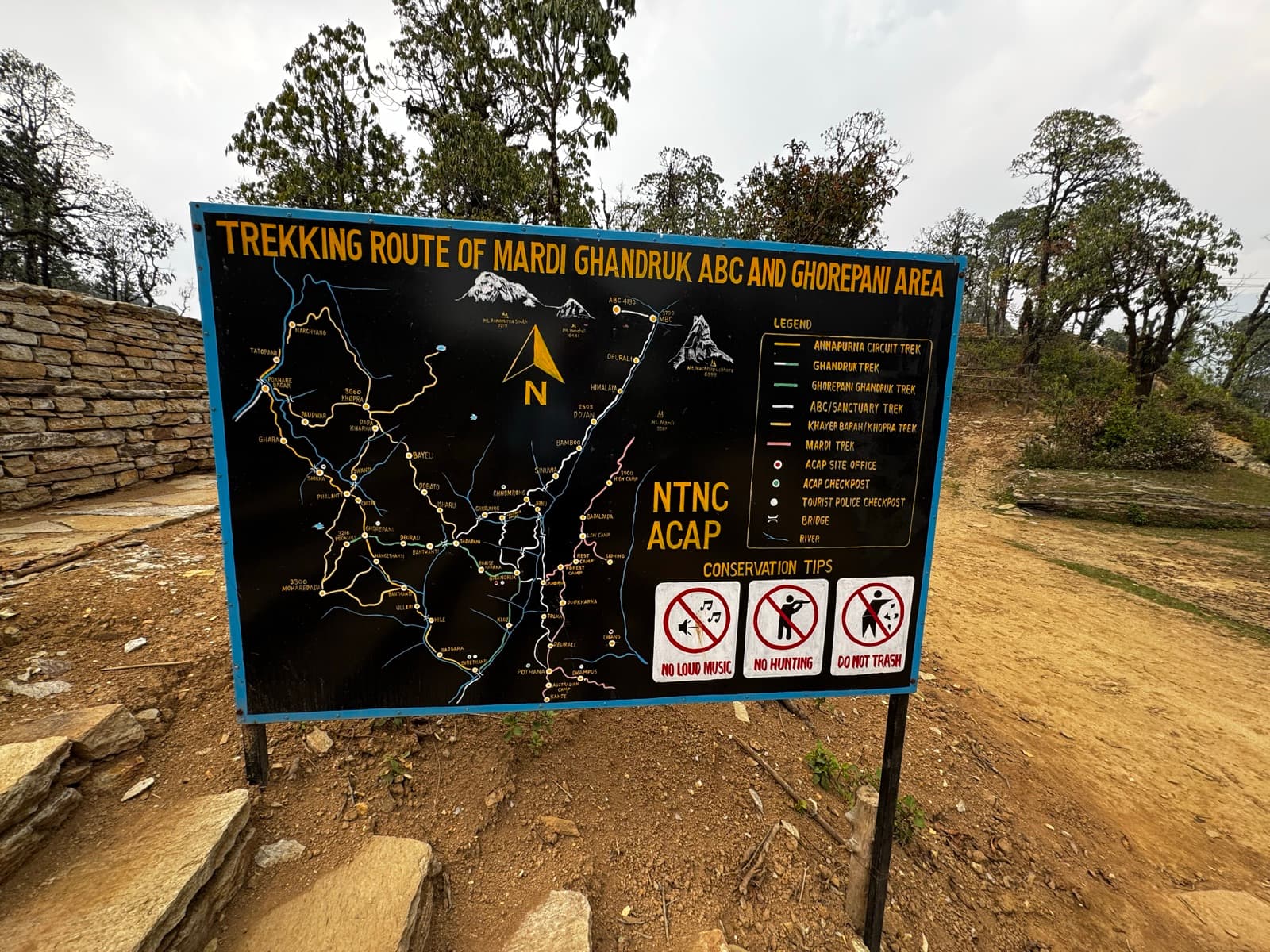
Mardi Himal Trek Itinerary (5-Day, Day-by-Day)
Here's exactly how our trek unfolded. There are 3-, 4- and 5-day versions of Mardi Himal — the 3-day version means very long days for fit trekkers only. We'd recommend the 5-day route we took: it gives your body time to adjust and lets you actually enjoy the forest rather than race through it.
Day 1: Goldanda ➔ Deurali (2,100 m)
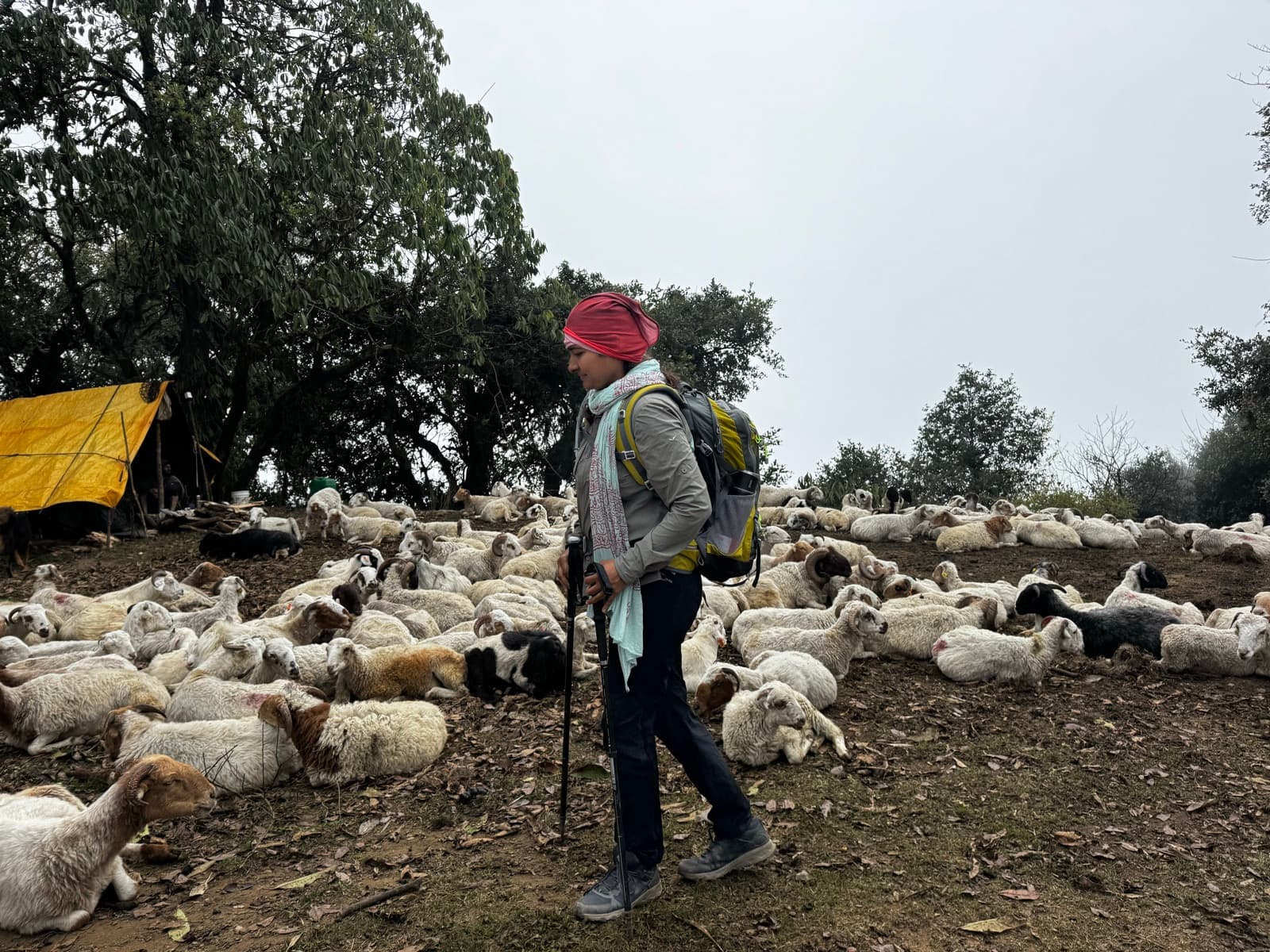
From Pokhara it's a short drive to the trailhead. We eased in through cool, shaded forest to Deurali (2,100 m), where the Mardi ridge trail proper begins. A gentle first day — perfect for finding your rhythm, with shepherds and their flocks for company on the lower trail.
Day 2: Deurali ➔ Forest Camp / Kokar (2,600 m)
A beautiful walk through thick, mossy forest to Forest Camp (Kokar, ~2,600 m). We were lucky with our timing — the magnolias were in full bloom. The whole pathway smelled incredible, and entire mountain slopes were turned white with the flowers. It's the kind of thing photos never quite capture.
Day 3: Forest Camp ➔ High Camp (3,580 m)
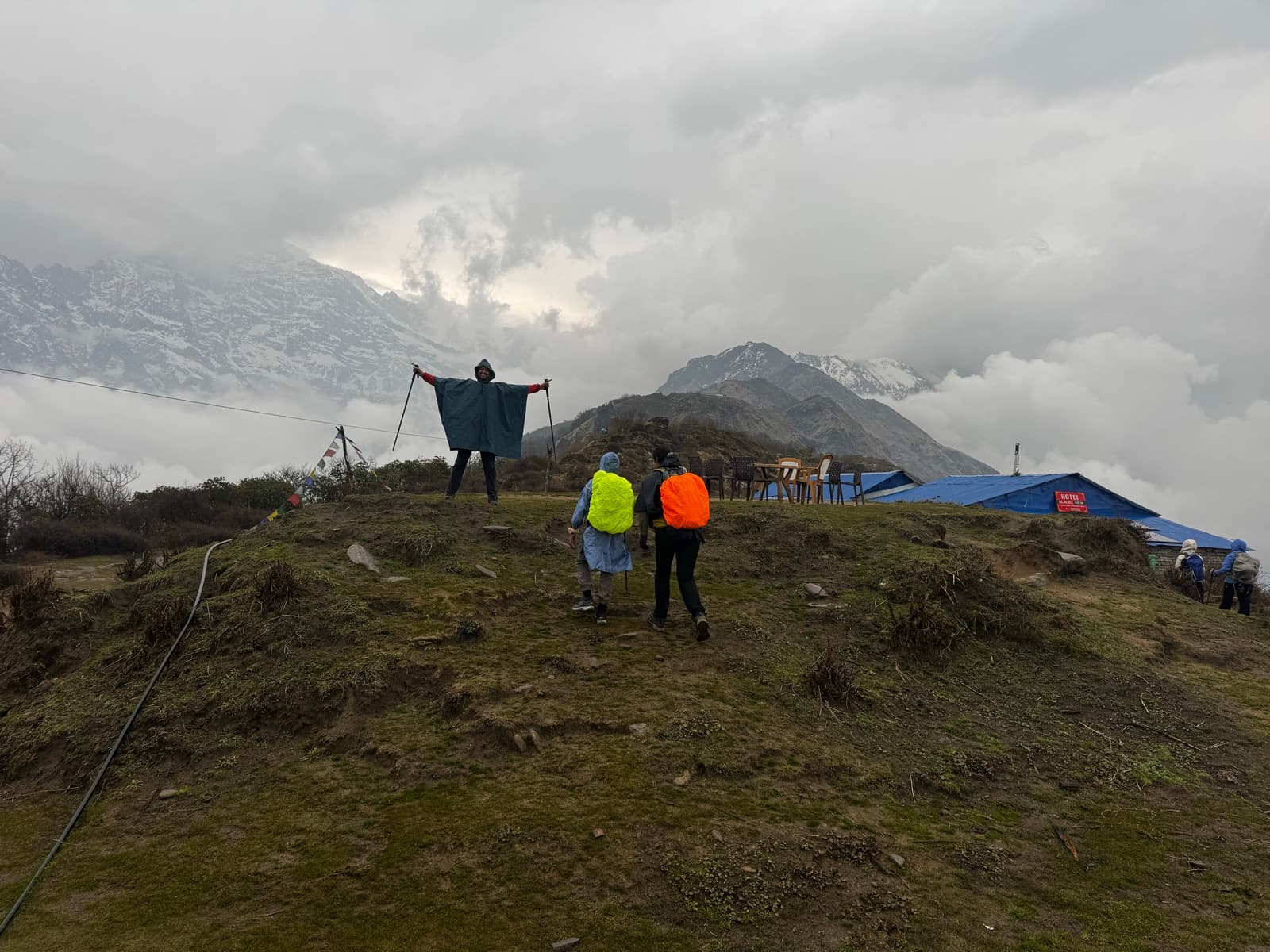
This is the day the views explode. The trail breaks above the treeline past Low Camp and Badal Danda, and suddenly the giants are right there in front of you. We climbed steadily to High Camp (3,580 m), our base for the summit push. The air is noticeably thinner here — take it slow.
Day 4: High Camp ➔ Mardi Himal Base Camp Viewpoint (4,500 m) ➔ Badal Danda
The big one. To catch sunrise from the top, you start climbing at around 3 a.m. in the dark with a head-torch. The last stretch from High Camp up to the Mardi Himal viewpoint is genuinely tough — steep, exposed and cold — but the reward is one of the great Himalayan sunrises: Machhapuchhre catching the first gold, a flat sea of cloud below, and silence.
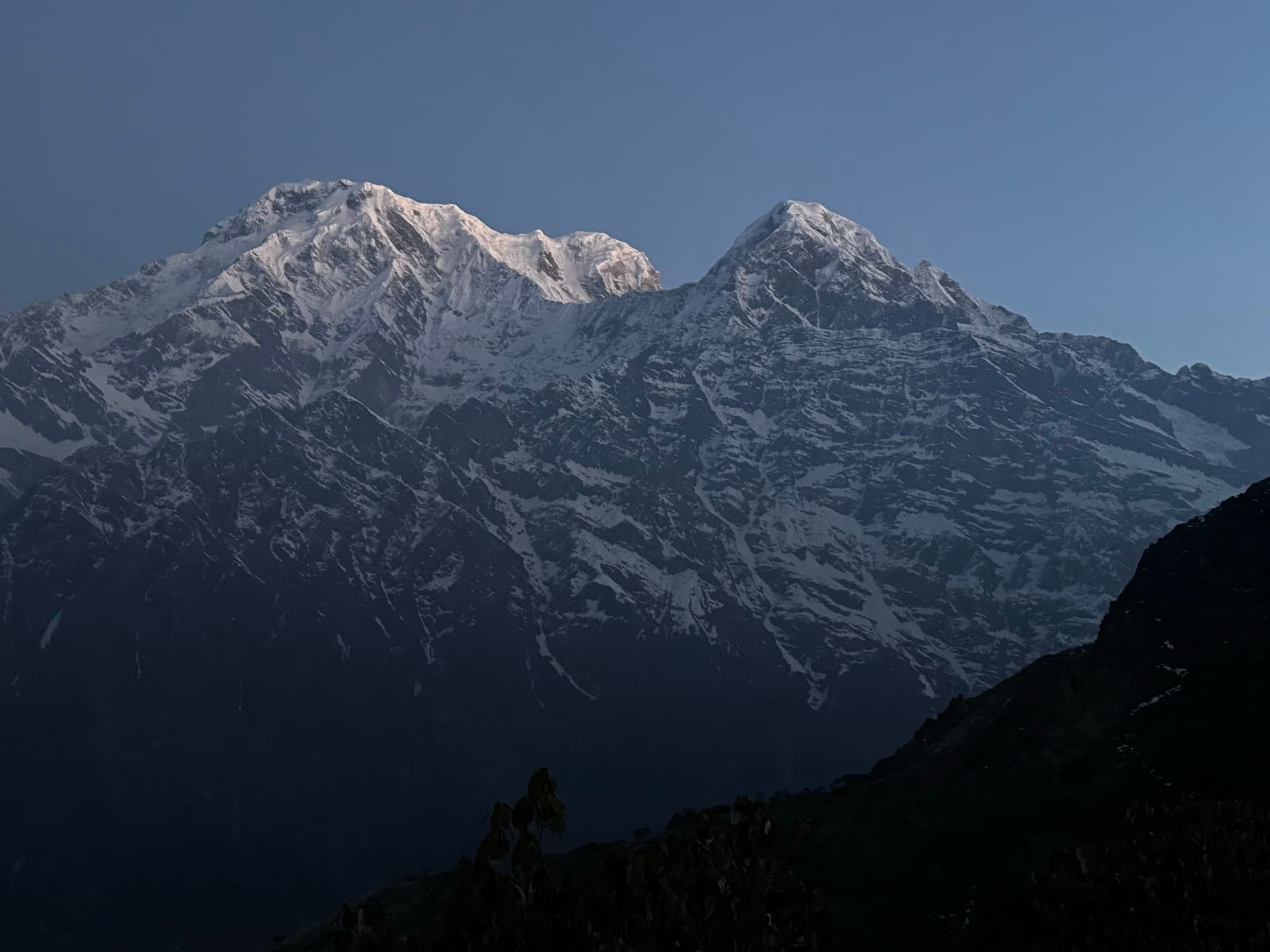
After soaking it in at 4,500 m, we descended all the way back down to Badal Danda for the night, knees thoroughly tested.
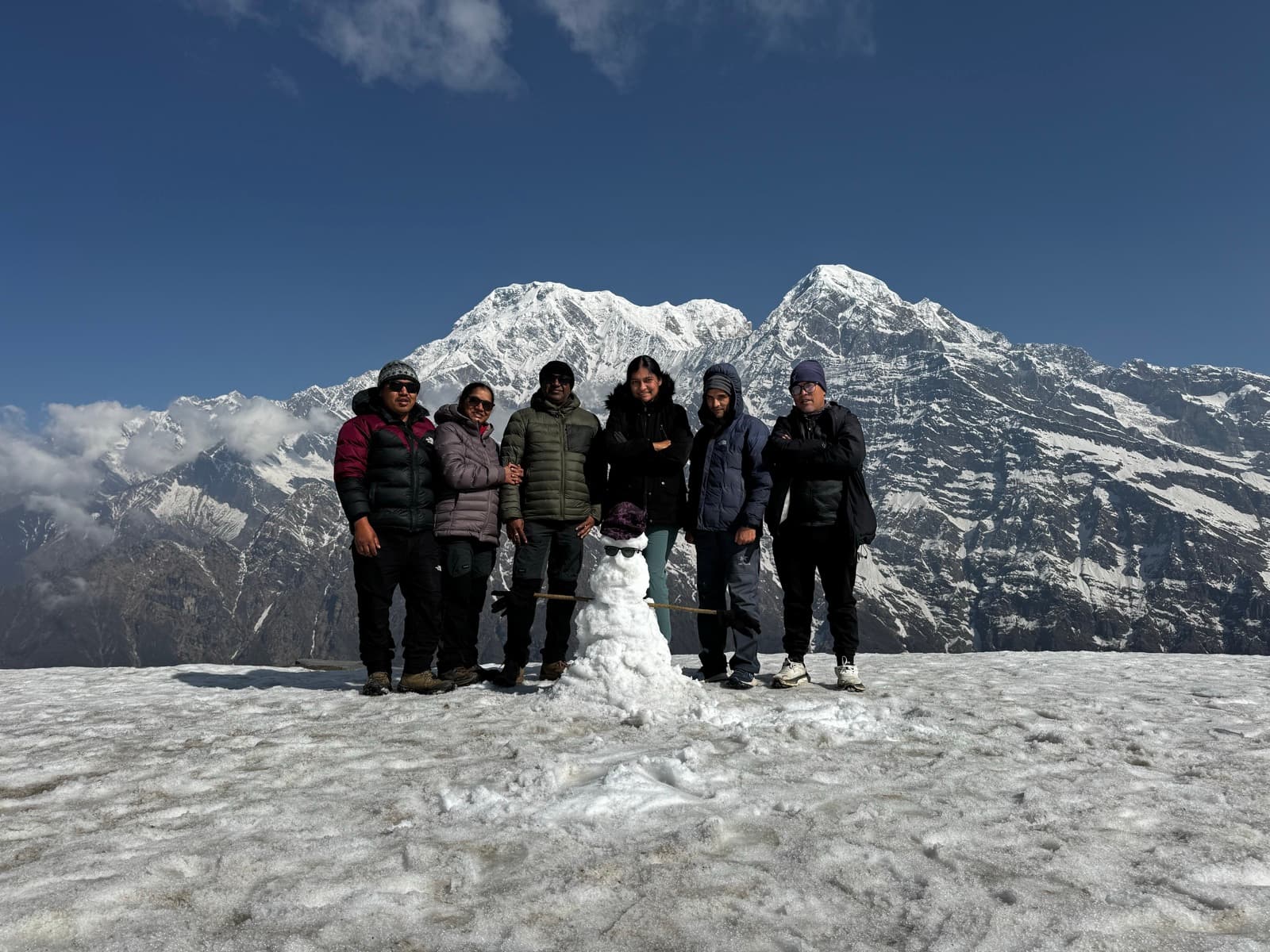
Day 5: Badal Danda (3,210 m) ➔ Road-head ➔ Jeep to Pokhara
A long, scenic descent off the ridge to the road-head, where we picked up a jeep back to Pokhara. By lunchtime we were back among hot showers and lakeside cafés — which is part of Mardi's charm: high adventure, short timeline.
Best Time to Trek Mardi Himal
There are two prime windows, and they offer different things:
- Spring (March–May) — our pick if you love the forest. This is when the rhododendrons and magnolias bloom in red, pink and white between roughly 2,000–3,500 m. Days are pleasantly warm lower down; the trade-off is afternoon haze and cloud build-up, so you'll want early starts for clear peaks.
- Autumn (late September–November) — the clearest skies of the year. October in particular delivers stable weather and the sharpest mountain views, at the cost of busier teahouses and colder nights as November sets in.
- Winter (Dec–Feb) is doable but cold, with possible snow blocking the upper trail and some lodges closed. Monsoon (Jun–Aug) brings slippery trails, leeches in the forest and poor visibility — generally best avoided.
One pattern to plan around in any season: mornings are clear, clouds roll in by midday. That's exactly why the summit push starts before dawn.
Mardi Himal Trek Difficulty & Fitness
We'd rate Mardi Medium. It's beginner-friendly in the sense that it's not technical — no ropes, no glacier crossings — but don't underestimate it. You'll walk 5–7 hours a day, and the trail is built from relentless stone staircases rather than gentle switchbacks, so it's hard on the legs both up and down.
The genuinely strenuous part is the High Camp → Base Camp viewpoint push, gaining roughly 1,000 m of elevation on summit morning at altitude where there's ~40% less oxygen than at sea level. If you can comfortably do a few hours of hill walking with a daypack, you'll be fine — just go slow, keep a "conversation pace", and let your body acclimatize. New to high-altitude trekking? Skim our top 10 tips for planning your first trek before you go.
Mardi Himal Trek Cost & Permits (ACAP & TIMS)
You need two permits, both easy to arrange (your trekking company will usually handle them):
- ACAP (Annapurna Conservation Area Permit): NPR 3,000 for foreign nationals, NPR 1,000 for SAARC nationals (including Indians).
- TIMS Card: around NPR 2,000 for foreign individual trekkers (less via an agency/group); significantly cheaper for SAARC nationals.
Guide rule: since 1 April 2023, foreign trekkers are required to hire a licensed guide in Nepal's conservation areas, which includes Mardi Himal. Beyond the rule, we'd recommend a guide regardless — more on that below.
Budget guide:
- A typical guided 4–5 day package runs roughly USD 300–500 per person from Pokhara (more from Kathmandu), usually covering guide, porter, both permits, twin-share teahouse lodging, all meals, and jeep transport to and from the trailheads.
- Going independent (with your own hired guide), on-trail costs land around NPR 3,000 / ~USD 22 per day for room and meals, with extras like hot showers, wifi and device charging charged separately (and pricier the higher you go).
Mardi Himal vs Annapurna Base Camp (ABC)
Trying to choose between Nepal's two great Annapurna treks? Here's the quick comparison:
| Mardi Himal | Annapurna Base Camp | |
|---|---|---|
| Duration | 4–5 days | 7–12 days |
| Max altitude | ~4,500 m | 4,130 m |
| Crowds | Quiet | Popular / busy |
| Highlight | High ridge, close-up Fishtail | Deep into the glacial sanctuary |
| Best for | Limited time, big views fast | Immersive, classic long trek |
Short on time but craving drama? Mardi wins. Want the full sanctuary experience? Go ABC.
Teahouses, Food & Toilets — What to Expect
The teahouses on Mardi are cosy, and honestly the food and bedding were good at every single stop — warm dining halls, hot dal bhat, plenty of tea. But here's the important bit:
After Forest Camp, the comfort drops. You won't get luxuries like attached toilets or any kind of heating in your room. That's not bad management — it's the rules. The whole route is inside a conservation area where lighting fires is not permitted, so lodges run on solar and gas, and bedrooms stay unheated. The dining hall might have a stove in the evening; your bedroom will not.
The practical upshot: your sleeping bag, not the building, keeps you warm at night. Come prepared with proper gear (see the packing list below), and don't count on borrowed blankets up high.
Mardi Himal Trek Packing List
Tuned for a spring/autumn Mardi trek:
- Layers: moisture-wicking base layers, a fleece mid-layer, a down/synthetic puffy jacket, and a waterproof/windproof shell.
- A warm sleeping bag (rated to about −10 °C) — this is non-negotiable given the unheated rooms up high.
- Head-torch with spare batteries — essential for the 3 a.m. summit push.
- Trekking poles — your knees will thank you on those long stone-step descents.
- Microspikes if you're trekking early-spring or late-autumn when the upper ridge can be icy.
- Sun protection: high-SPF sunscreen, lip balm, UV sunglasses, sun hat — the high-altitude sun is fierce.
- Power bank (10,000–20,000 mAh) — charging is limited and usually paid per device up high.
- Water purification, a warm hat and gloves, a buff, wool socks, and a basic first-aid kit with any personal medication.
Altitude & Staying Safe
At 4,500 m, acute mountain sickness (AMS) is a real consideration. Mardi's quick vertical profile means many trekkers gain altitude faster than the ideal ~300–500 m of sleeping elevation per night, so be alert to the signs: headache, nausea, loss of appetite, dizziness, poor sleep — "like a hangover that won't lift".
The golden rules: ascend slowly, hydrate well (3–4 litres a day), eat plenty of carbs, skip the alcohol, and if symptoms get worse, descend — descent is the only real cure. Some trekkers take Diamox as a preventative, but that's a conversation for your doctor before the trip, not something to self-prescribe.
Finally, get travel insurance that explicitly covers trekking to at least 4,500 m and helicopter evacuation — standard policies usually don't, and a self-funded heli rescue can run into thousands of dollars.
Tips for the 3 a.m. Summit Push
A few hard-won pointers for the toughest, most magical part of the trek:
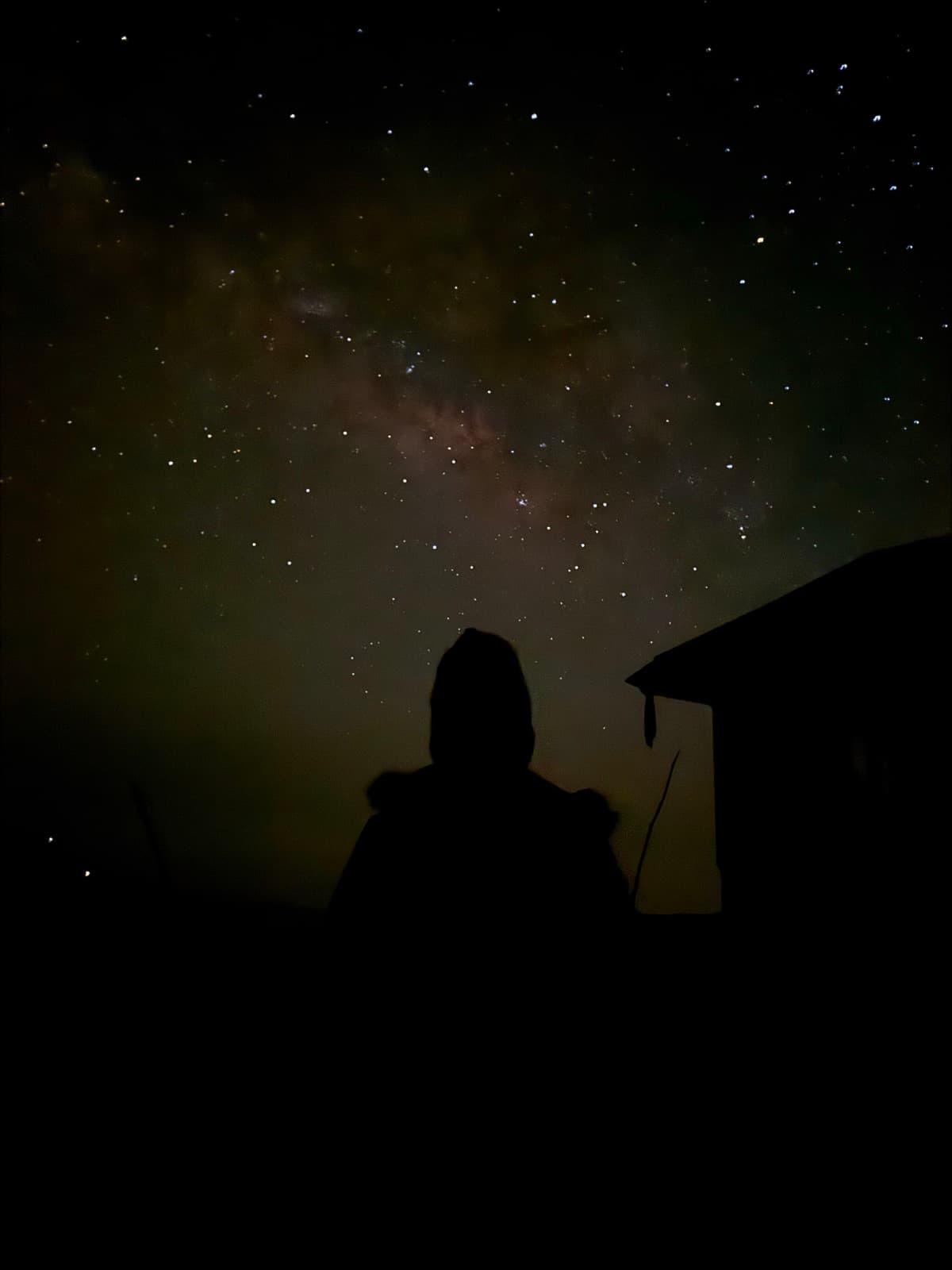
- Sleep early the night before. You're up at 3 a.m. — every hour of rest counts.
- Sort out your stomach. Make sure your bowels are clean before you start climbing — trust us, you do not want to be dealing with that on a steep, freezing, exposed ridge in the dark. Easily our most practical piece of advice.
- Dress in full layers before you leave — down jacket, hat, gloves — and warm up with a hot drink.
- Eat something even if you're not hungry; carry snacks and water (insulate the bottle so it doesn't freeze).
- Start in the dark on purpose — the goal is to be at the viewpoint for sunrise, before the mid-morning clouds swallow the peaks.
Who We Trekked With: Base Camp Hike
We organised our trek through Base Camp Hike Pvt Ltd, and we can recommend them wholeheartedly — they were genuinely meticulous.
A couple of things stood out. The trail is well marked, so in theory you could navigate it yourself — but Nepal is so much better with a good guide. Ours kept us engaged the whole way with wonderful stories about the land, its people and its mountains, the kind of context you'd never get walking solo. The logistics were seamless too: permits sorted, teahouses arranged, and steady, sensible pacing that kept everyone safe and well-acclimatized through the altitude.
If you're planning Mardi Himal and want a team that sweats the details so you can simply enjoy the mountains, they're a safe pair of hands. Tell them TravelCharcha sent you.
Frequently Asked Questions
How many days is the Mardi Himal Trek? Most people do it in 4–5 days. We recommend 5 days — it gives you better acclimatization and time to enjoy the forest and ridge rather than rushing.
Is the Mardi Himal Trek hard? It's a medium-difficulty trek. There's no technical climbing, but expect 5–7 hours of walking a day on steep stone steps, and a genuinely tough summit-morning push from High Camp to the 4,500 m viewpoint.
Do I need a guide for the Mardi Himal Trek? Since April 2023, foreign trekkers are required to hire a licensed guide in Nepal's conservation areas, including Mardi Himal. Even where rules are relaxed, we'd strongly recommend one — for safety, logistics and the stories.
What is the highest point of the Mardi Himal Trek? The Mardi Himal Base Camp viewpoint at roughly 4,500 metres. High Camp, where you sleep before the final push, sits at about 3,580 m.
Mardi Himal vs Annapurna Base Camp — which should I do? If you're short on time and want maximum scenery for the effort, choose Mardi Himal. ABC is longer and takes you deeper into the sanctuary; Mardi gets you onto a high, dramatic ridge in half the time and with far fewer people.
When is the best time to do the Mardi Himal Trek? Spring (March–May) for the rhododendron and magnolia blooms, or autumn (October–November) for the clearest mountain views.
Final Thoughts
Mardi Himal gave us everything we love about the Himalaya — thin cold air, blazing sunrises, forests that smell of magnolia, and that quiet feeling of being very small under very big mountains — packed into just five days. If you've been putting off a Nepal trek because you "don't have the time", this is the one to do.
Watch our full Mardi Himal video above, and if it helped you plan, explore more of our Himalayan trekking guides — including our full Everest Base Camp series — for your next adventure.